SOR & ICT
Australian Curriculum
Hey!I am so glad you found your way here.A warm welcome to teachers-in-training, teacher educators, general teachers, and anyone else interested in engaging in this space.Photo credit: PIXSEL

ABOUT
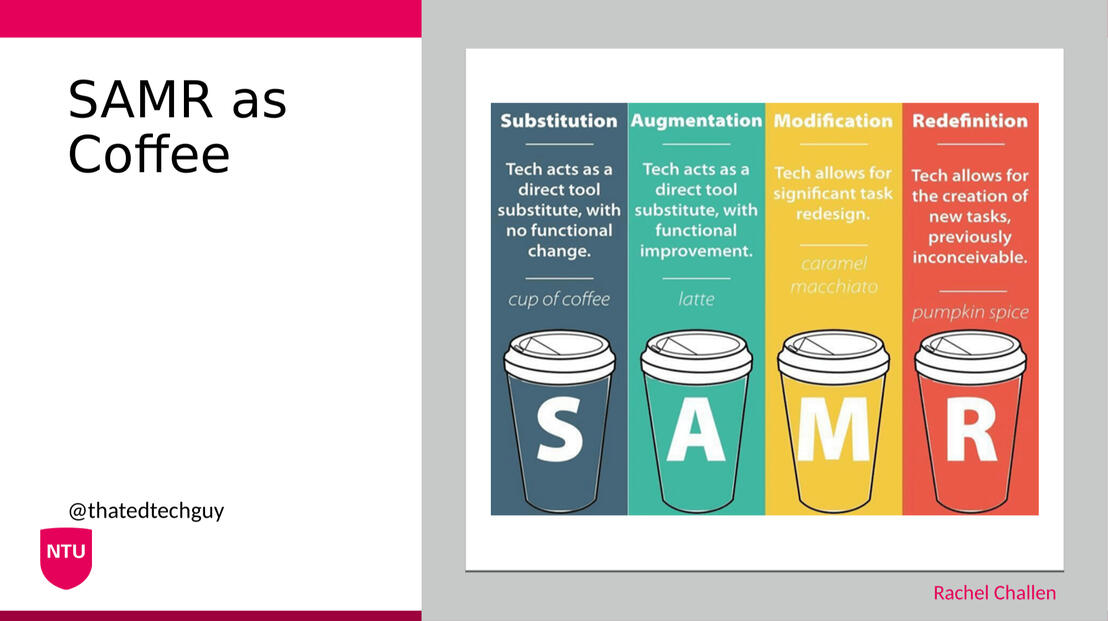
This space is specifically created for Studies of Religion (SOR) educators to get ideas, tips and information about the Australian Curriculum for SOR according to the NESA HSC Syllabus Curriculum.I have also created this space for you to explore how technology can be used as an enhancement tool for teaching and learning in your SOR classroom. The integration of technology into teaching practices can be a complex process and several theories and models such as SAMR, TIM, TPACK etc. have been developed to systematically guide learning designers, educators, and other stakeholders into this task (Bicalho et al., 2022).In this space, you will find out about the effectiveness, challenges, benefits, disadvantages and limitations of integrating technology in teaching and learning with the SAMR (Substitution, Augmentation, Modification, and Redefinition) model by Puentedura (2014).The SAMR as a framework describes progressively more complex approaches to integrating technology in educational settings. It provides structure to guide effective integration of technology in education and has long been used as a framework to support and help educators such as yourself design to implement and evaluate learning experiences systematically (Arantes, 2022).Happy exploring, learning, discovering and learning!EllenReferences:Arantes, J. (2022). The SAMR model as a framework for scaffolding online chat: a theoretical discussion of the SAMR model as a research method during these “interesting” times. Qualitative Research Journal, 22(3), 294–306. https://doi.org/10.1108/qrj-08-2021-0088Bicalho, R. N. de M., Coll, C., Engel, A., & Lopes de Oliveira, M. C. S. (2022). Integration of ICTs in teaching practices: propositions to the SAMR model. Educational Technology Research and Development, 71(2). https://doi.org/10.1007/s11423-022-10169-xChallen, R. (2022). The SAMR Model. National Teaching Repository. https://doi.org/10.25416/NTR.19887952Pexels. (2025). Free Stock Photos. Pexels.com; Pexels. https://www.pexels.com/Puentedura, R. (2014), “Building transformation: an introduction to the SAMR model [Blog post]”, available at: https://www.hippasus.com/rrpweblog/archives/2014/08/22/BuildingTransformation_AnIntroductionToSAMR.pdf
Blogs
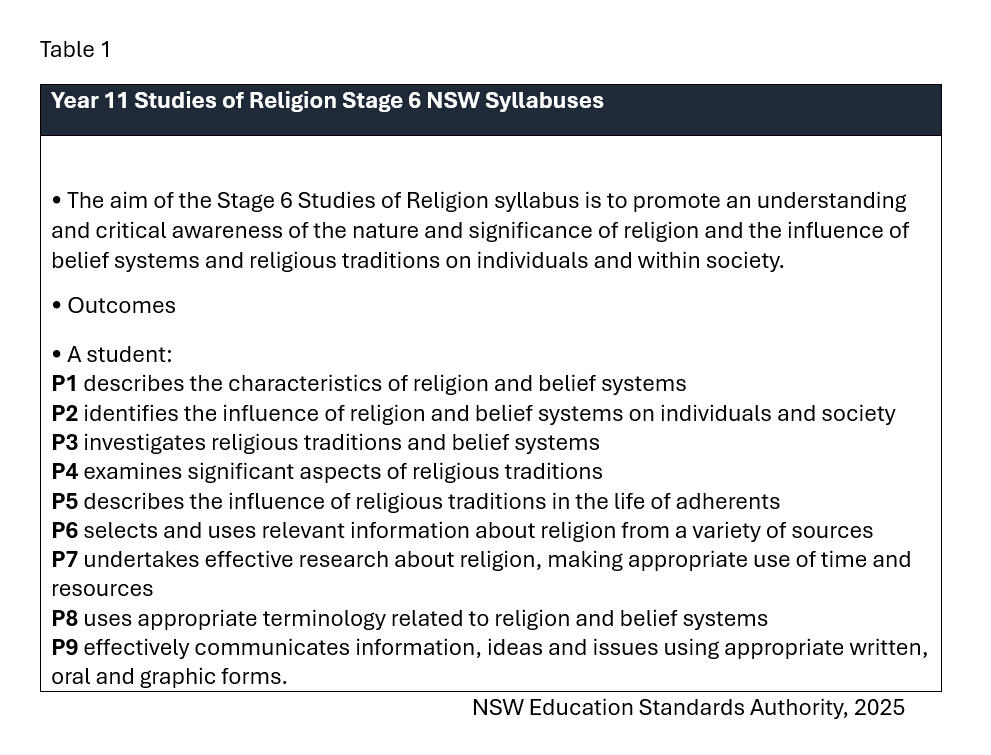
Two ways ICT can be used as a Modification activity:One way technology can be used as a Modification activity according to the SAMR model in SOR is, for example, creating a shared class Google document where students can describe key religious terms and create a collaborative glossary of key words, or, by pasting passages from a sacred text such as the Bible, Torah or Quran into Google Docs as a real-time collaboration platform to enable students to create, edit, identify, investigate, examine and discuss genre and literary context, translations, historical and cultural context in real time. This activity will enable students to meet the NESA stage 6 syllabus (see Table 1).Further, this activity will also allow teachers to provide real-time, comments, feedback, questions and suggestions to help guide and deepen the interaction (Bicalho et al., 2022).Bicalho et al. (2022) point out that at the Modification level of SAMR, physical boundaries of the school are eliminated; learning is extended into the various contexts students engage with; and students can use a range of digital tools and formats to research, organize and present data. As a result, teaching becomes more flexible and improved in supporting students express their perspectives and ideas.Also, Arantes (2022) suggests that giving students self-paced instructional video or educational content that uses audio and visual elements incorporated with interactive questioning is situated at the modification level of SAMR.Pena and Cassany (2024) inform that although podcasts are often distributed as compressed audio files in formats such as MP3, MP4 or ACC, they may also include visual components such as of a series of still images or filmed recordings of one or more speakers delivering the podcast content verbally.In SOR, students can be given a podcast with expert interviews and discussion on a particular religious topic to deepen students’ understanding and learning.Alvarenga Fournier and Sáenz Leandro (2022) argue that podcasts or podcasting serves as an effective technological tool that enables students to hear discussions about class topics and get extra information beyond what is covered in class.It enables students to apply theory into practice by developing their creative, reflective and critical thinking skills; have the flexibility of accessing, replaying and repeatedly engaging with the content; understand the subject matter better and remember key ideas (Alvarenga Fournier & Sáenz Leandro, 2022).References:
Alvarenga Fournier, X., & Sáenz Leandro, R. (2022). From Theory to Practice: Student Podcasting through Online Learning Environments in Political Science. Digital Education Review, 42, 81–100. https://doi.org/10.1344/der.2022.42.81-100Arantes, J. (2022). The SAMR model as a framework for scaffolding online chat: a theoretical discussion of the SAMR model as a research method during these “interesting” times. Qualitative Research Journal, 22(3), 294–306. https://doi.org/10.1108/qrj-08-2021-0088Bicalho, R. N. de M., Coll, C., Engel, A., & Lopes de Oliveira, M. C. S. (2022). Integration of ICTs in teaching practices: propositions to the SAMR model. Educational Technology Research and Development, 71(2). https://doi.org/10.1007/s11423-022-10169-xPeña, I. A. de la, & Cassany, D. (2024). Student podcasting for teaching-learning at university. Journal of Technology and Science Education, 14(1), 123–141. https://doi.org/10.3926/jotse.2509Puentedura, R. (2014), “Building transformation: an introduction to the SAMR model [Blog post]”, available at: https://www.hippasus.com/rrpweblog/archives/2014/08/22/BuildingTransformation_AnIntroductionToSAMR.pdfNSW Education Standards Authority (NESA). (2025, March 10). Studies of Religion I Stage 6 Syllabus (2009). NSW Government. https://www.nsw.gov.au/education-and-training/nesa/curriculum/hsie/studies-of-religion-1-stage-6-2009
Resources
Digital audio technology—especially podcasts—can meaningfully complement traditional teaching methods by expanding how content is delivered and engaged with. Podcasts used in education can be created with the support of artificial intelligence (AI) (Folgert & DeGroot, 2024).Google NotebookLM is a personalized AI research assistant that analyses uploaded documents and contents to organize information, summarize and discuss content, create a study guide, generate audio conversations like podcasts and so forth (Desmedt et al., 2025).The benefit of using NotebookLM to generate a podcast is that the tool allows the user to upload content from a variety of sources such as pdf’s, articles, websites, books, YouTube, notes, google documents and so forth.Desmedt et al. (2025) stipulates that features like Audio Overview in NotebookLM are designed to directly draw from specific sources and retrieve relevant content rather than generating responses. The system is built to reduce the likelihood of hallucinations or errors where the AI invents or misrepresents information and increase the trustworthiness of the tool. However, Desmedt et al. (2025) point out that the tool is not flawless and reduced “hallucinations” doesn’t mean no “hallucinations”, as AI-generated discussions can oversimplify complex ideas, misinterpret parts of the source material or context and emphasize less relevant points.However, albeit limited, users can “prompt” their podcast generation by supplying specific instructions regarding the podcast’s focus, target listeners, and additional parameters such short, long, brief or default Audio Overview.AI driven voice and sound synthesis enables the creation of realistic narration without requiring human recording. And although multilingual content can be produced quickly, different speakers can be stimulated, and material can be updated dynamically, it still requires careful oversight to ensure accuracy and authenticity (Rime et al., 2022).References:
Desmedt, C. P., Budts, W., De Vos, M., & Moons, P. (2025). Artificial intelligence-generated podcasts open new doors to make science accessible: a mixed-method evaluation of quality and the potential for science communication. European Journal of Cardiovascular Nursing, zvaf074. https://doi.org/10.1093/eurjcn/zvaf074Folgert, A., & DeGroot, K. (2024). Using AI-Generated Podcasts as an Adjunct to Traditional Teaching Strategies. Nurse Educator. https://doi.org/10.1097/nne.0000000000001787Rime, J., Pike, C., & Collins, T. (2022). What Is a podcast? Considering Innovations in Podcasting through the six-tensions Framework. Convergence: The International Journal of Research into New Media Technologies, 28(5), 1260–1282. https://doi.org/10.1177/13548565221104444
Listen to this brief podcast on how ICT can be used to flip your classroom to enhance teaching and learning in SOR.
Google NotebookLM. (2025). Google.com. https://notebooklm.google.com/notebook/54235bf5-f2b4-4238-baf1-fbc4fac04c52